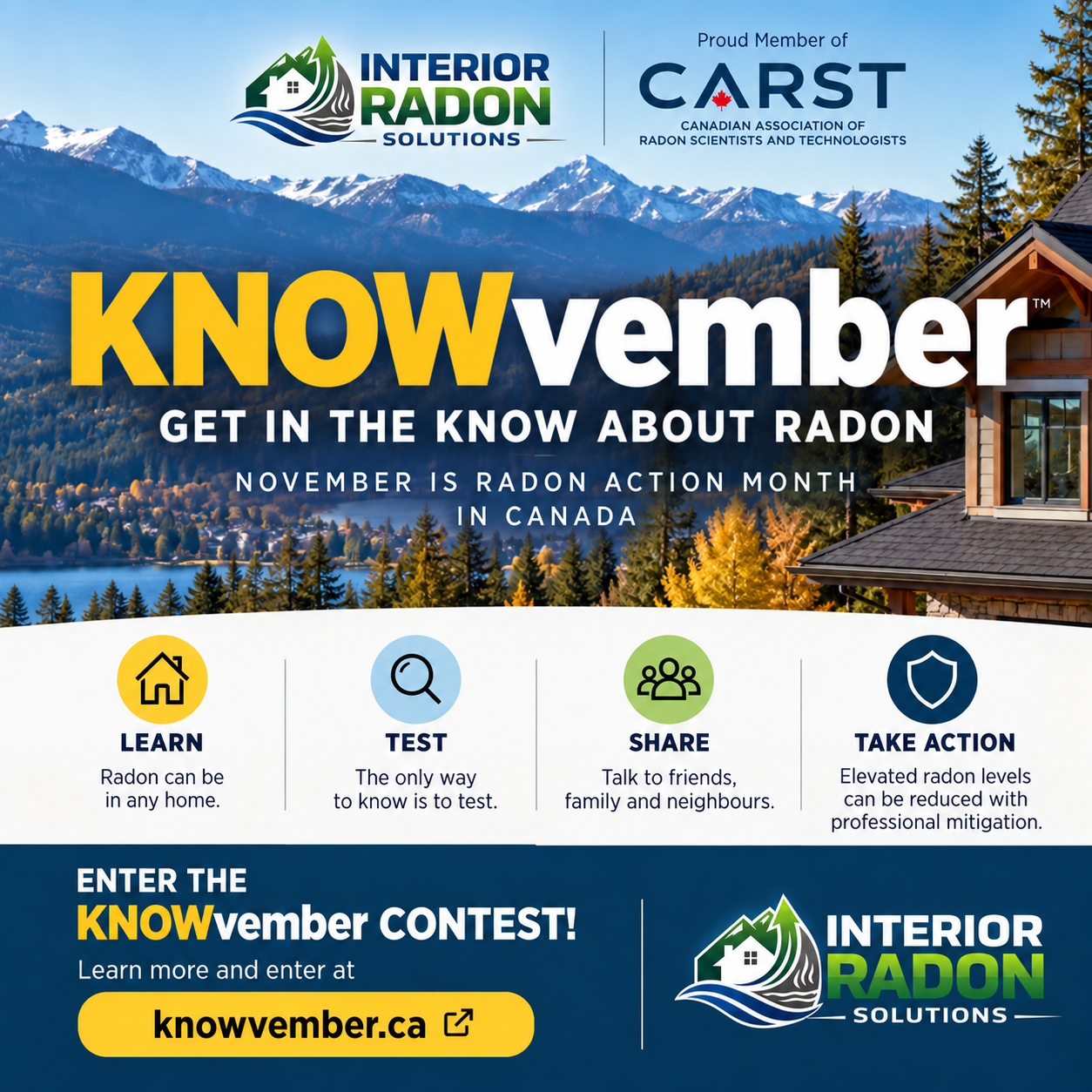
November is Radon Action Month in Canada
KNOWvember is a reminder to learn, test and share what we know with the people around us.
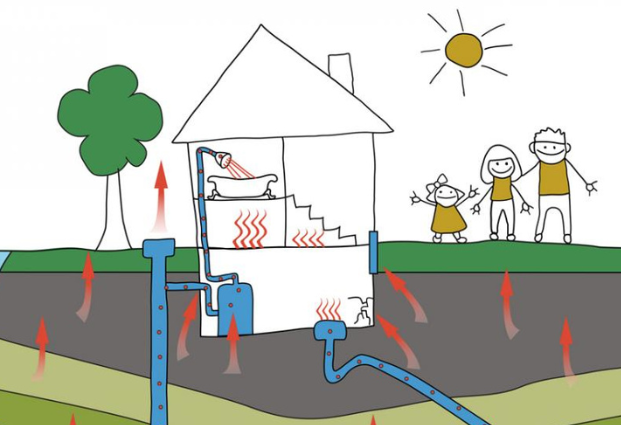
Radon is a naturally occurring radioactive gas that can enter homes from the ground. You can’t see or smell it, and long-term exposure increases the risk of lung cancer. The only way to know your home’s level is to test—even if a neighbour has already tested theirs.
Health Canada recommends a long-term test for at least three months, ideally during fall or winter.
What Are Radon Levels Like in Our Region?
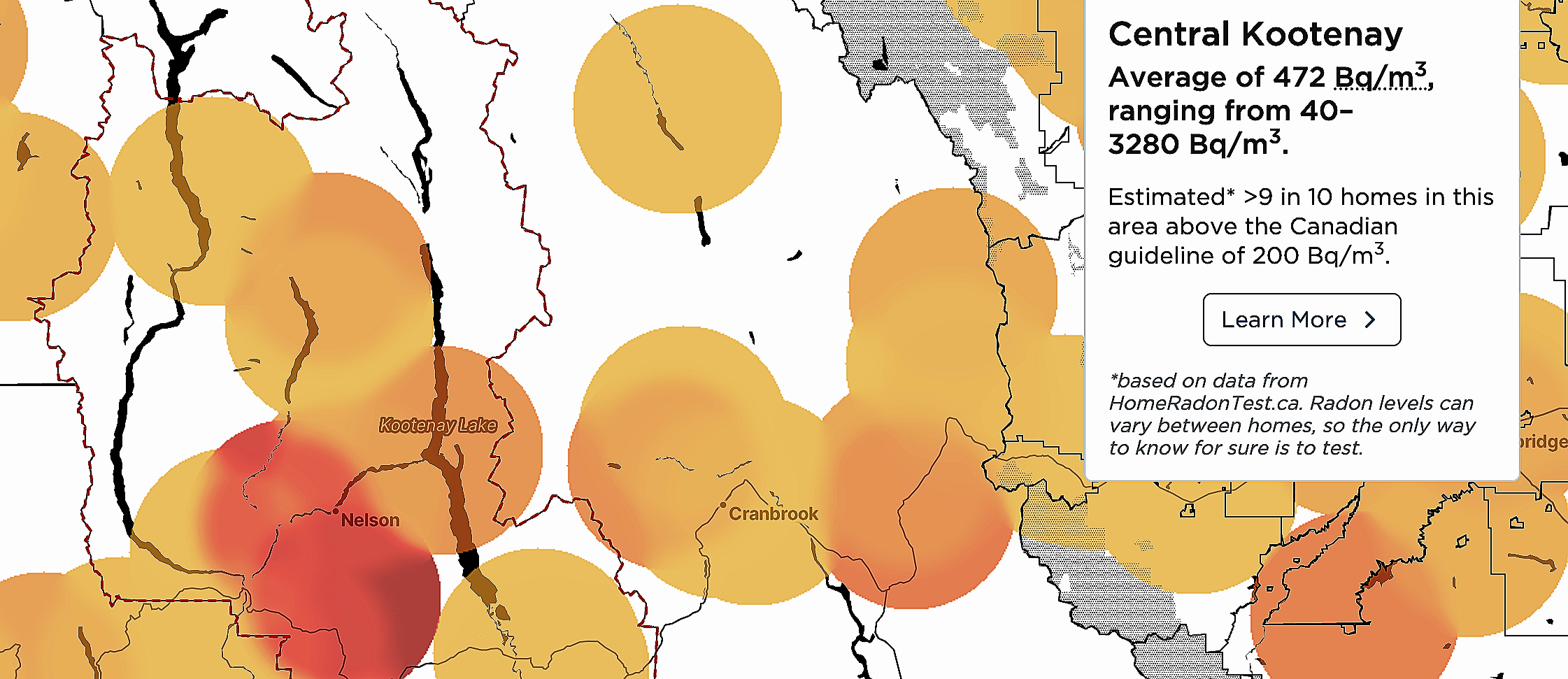
Recent community testing across the Kootenays and Southern Interior has found elevated radon levels in homes throughout the region. Explore local testing results, current radon initiatives, and trusted information from Health Canada, Interior Health and Take Action on Radon.
Radon Testing Results Across Our Region
Long-term community testing has identified elevated radon levels in homes across the Kootenays and Southern Interior.
About the Community Testing Program
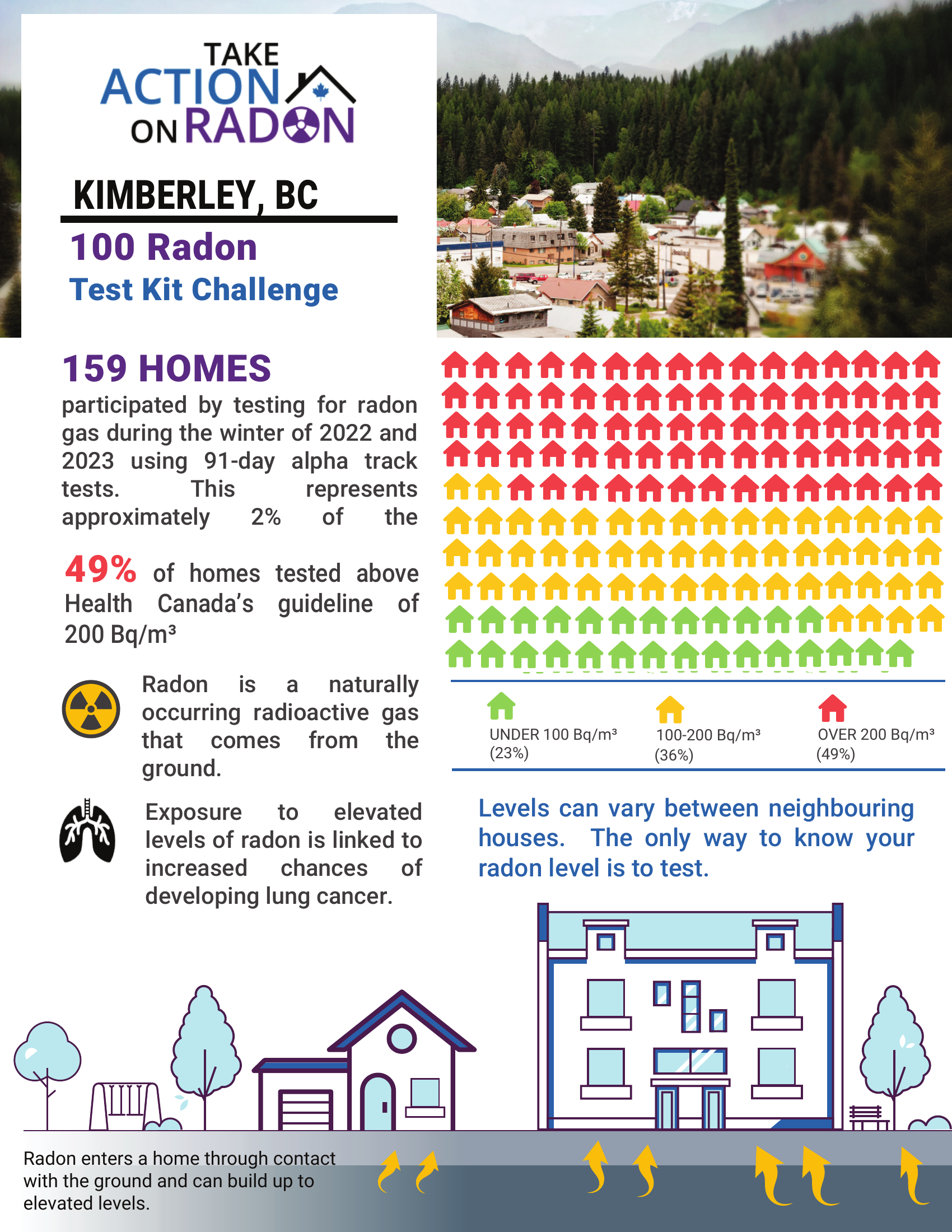
These results come from the 100 Radon Test Kit Challenge, a community testing program delivered through Take Action on Radon, a national initiative funded by Health Canada. Participating households use long-term radon detectors for at least 91 days, helping provide a snapshot of radon levels within participating homes in each community.
Click any community report below to view the full official results
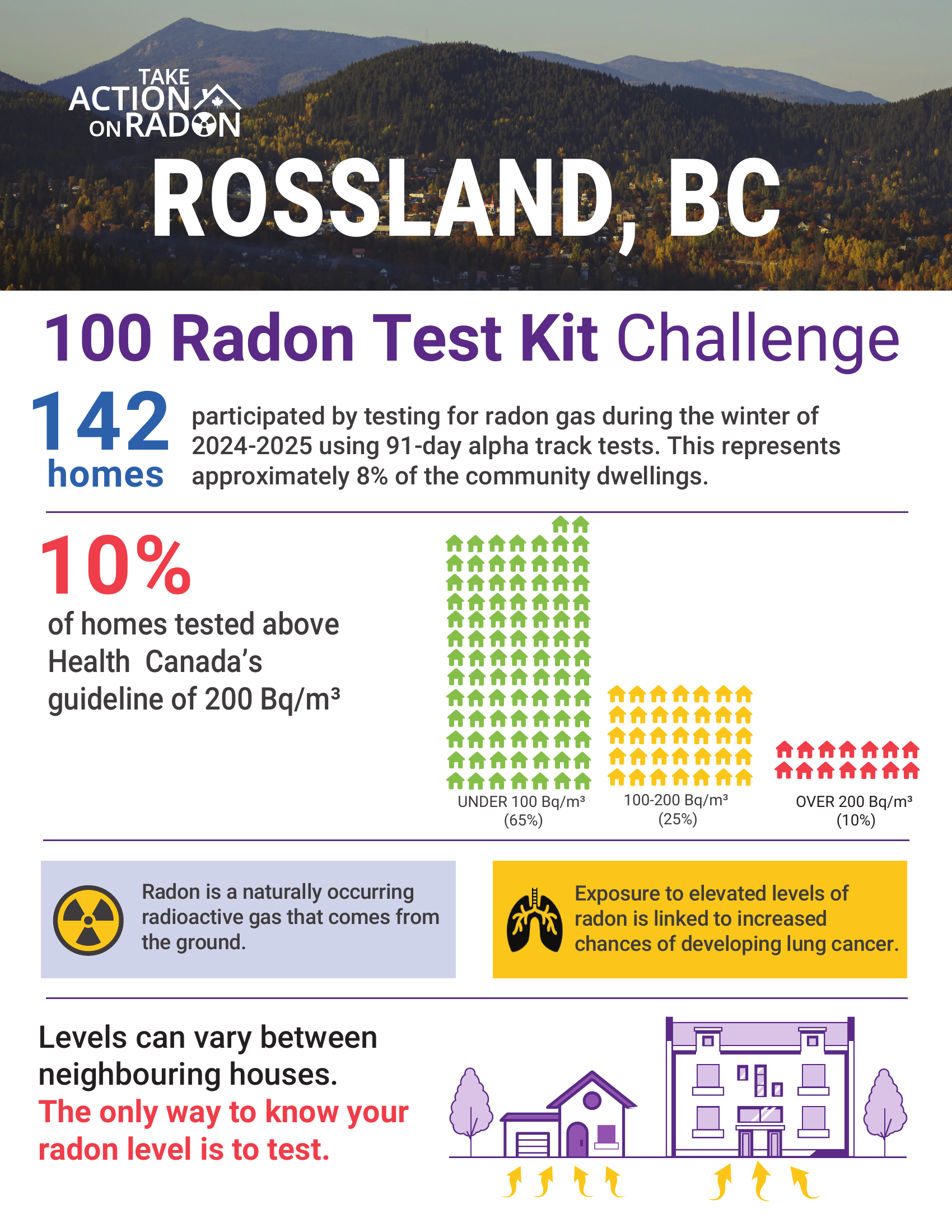
ROSSLAND
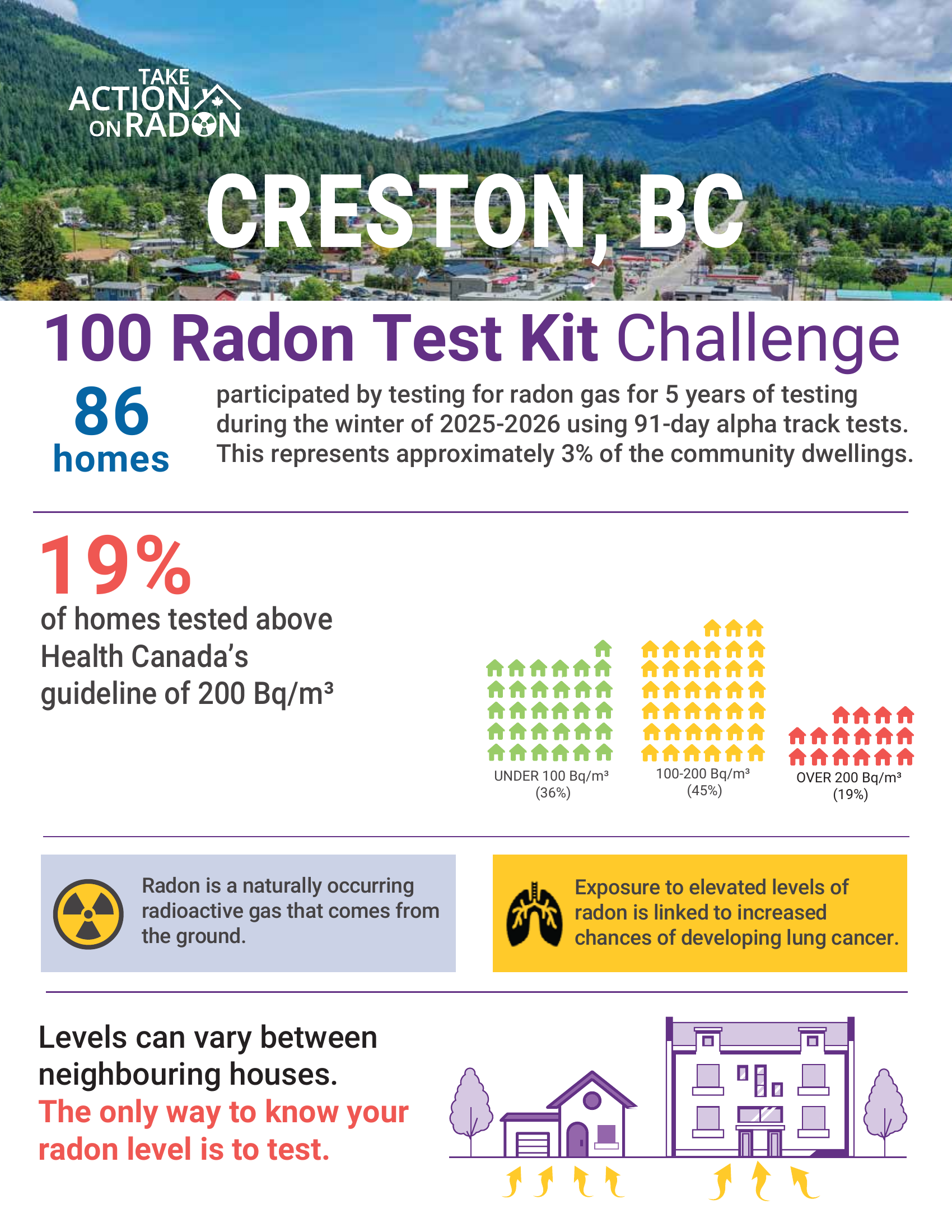
CRESTON
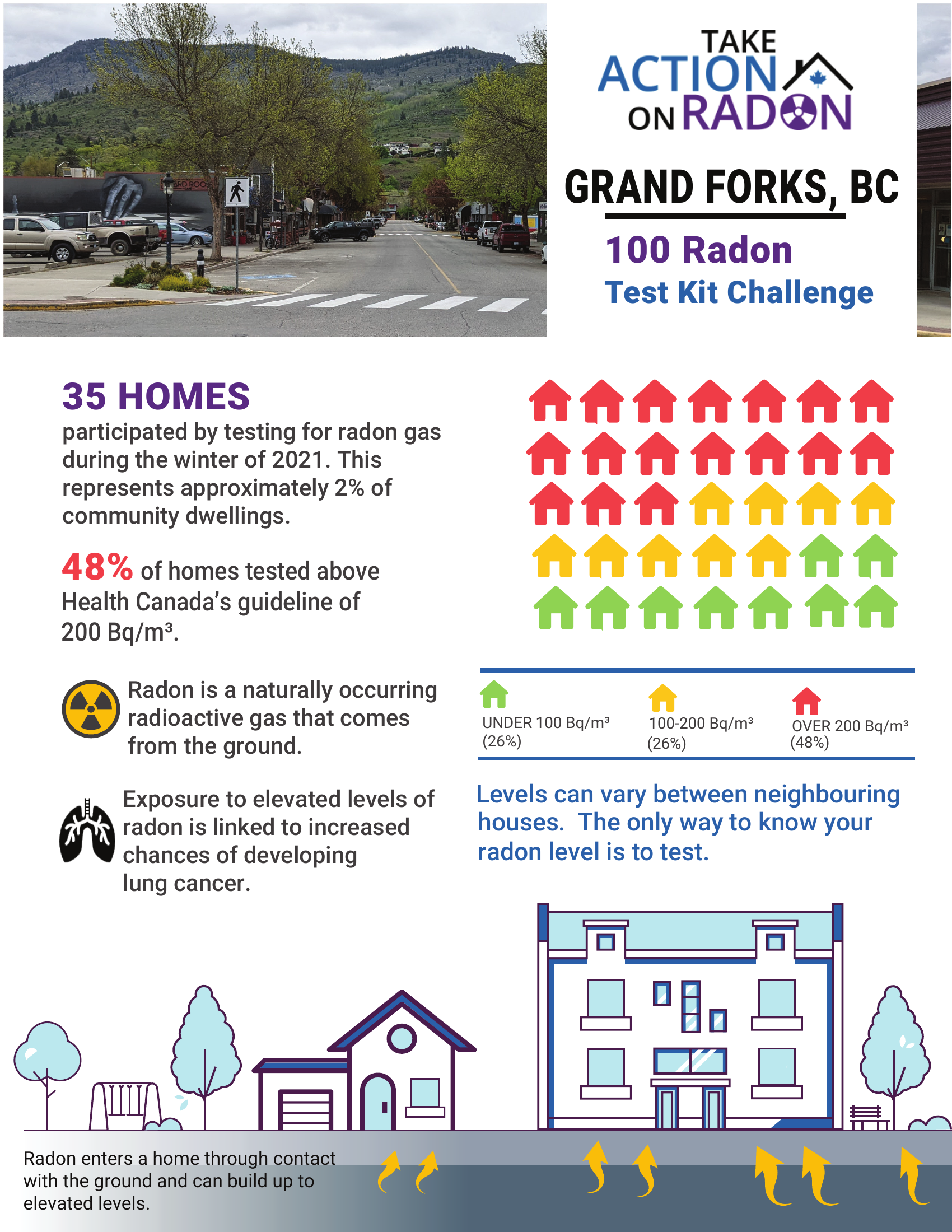
GRAND FORKS
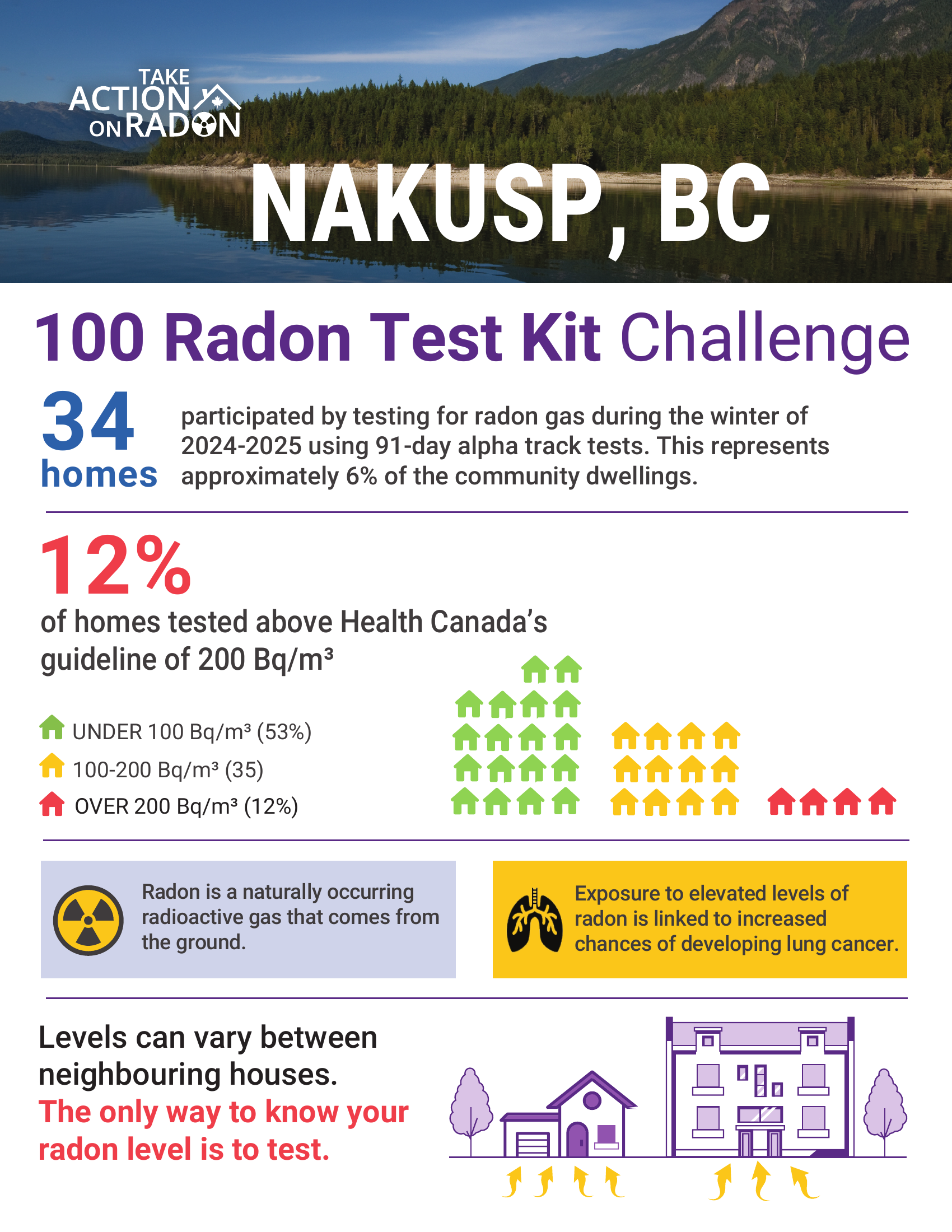
NAKUSP
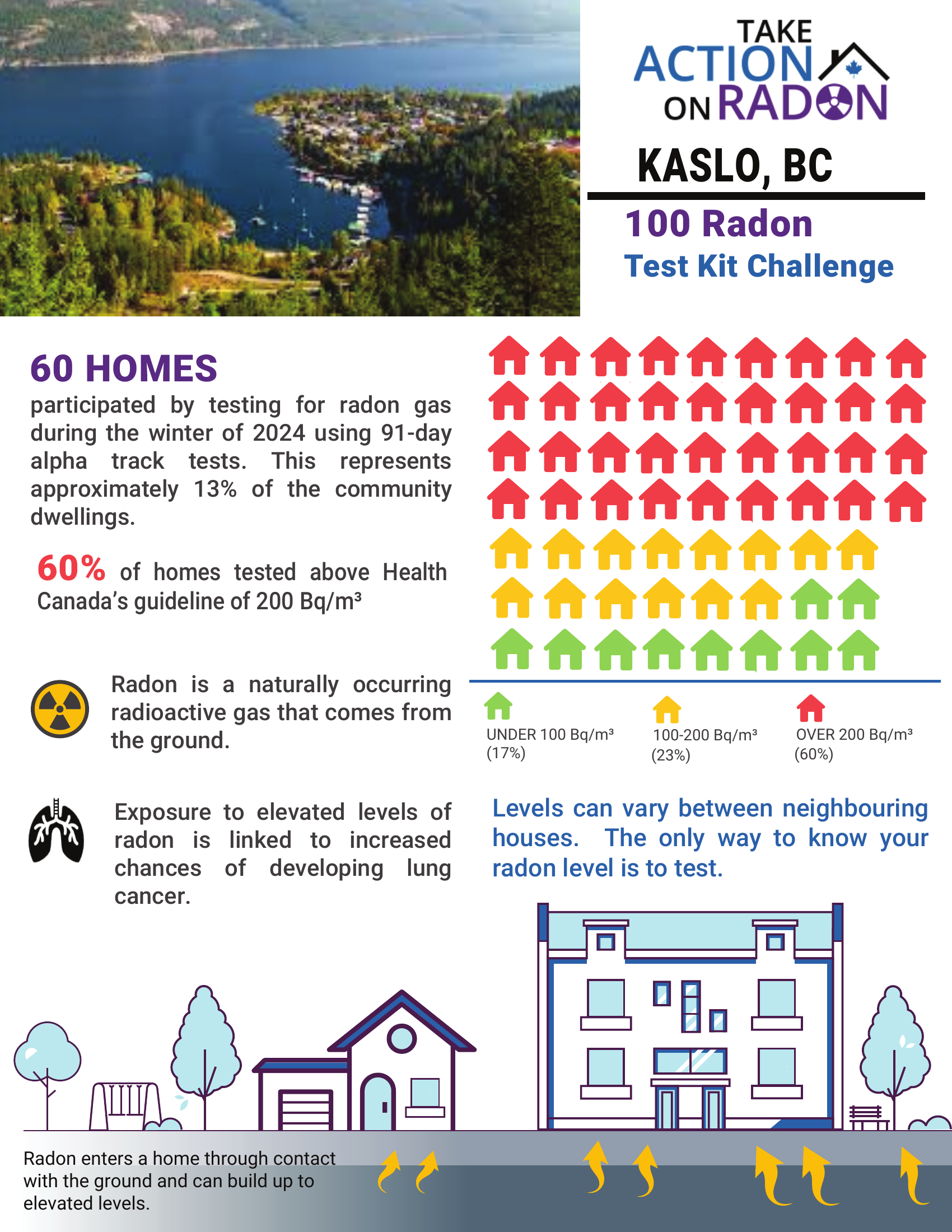
KASLO